Hard, Memorable, Goofy – Adding Variety to Winter Training

It’s cold. It’s dark. By late January, big volume endurance training starts to get boring and repetitive for club-level athletes. Spring’s a long way off. How to keep motivated?

This weekend I organized a two-hour continuous workout for athletes of my rowing club, using the great athletic facility at the University of Toronto – Mississauga. All told, this consisted of 30 minutes of Concept 2 rowing, 30 minutes of bodyweights (jump squats, pushups, etc.), 20 minutes of spinning, 20 minutes of running, and 10 minutes each of Concept 2 skierg and athletes-choice training. This training was done in twelve different stations of 10 minutes each, done consecutively (example: erg, bodyweights, run, spin, skierg, bodyweights, free choice, erg, body weights, run, spin).

We’ve done two of these long multi-sport workouts this winter – here’s what has worked so far.

Maintain Some Familiarity: Rowers need to row. Runners need to run. Riders need to spin. Your program should include your main sport in its mix. But you can change that activity slightly. In our case, we made use of the Concept 2 sliders, which better simulate how a rowing shell moves.
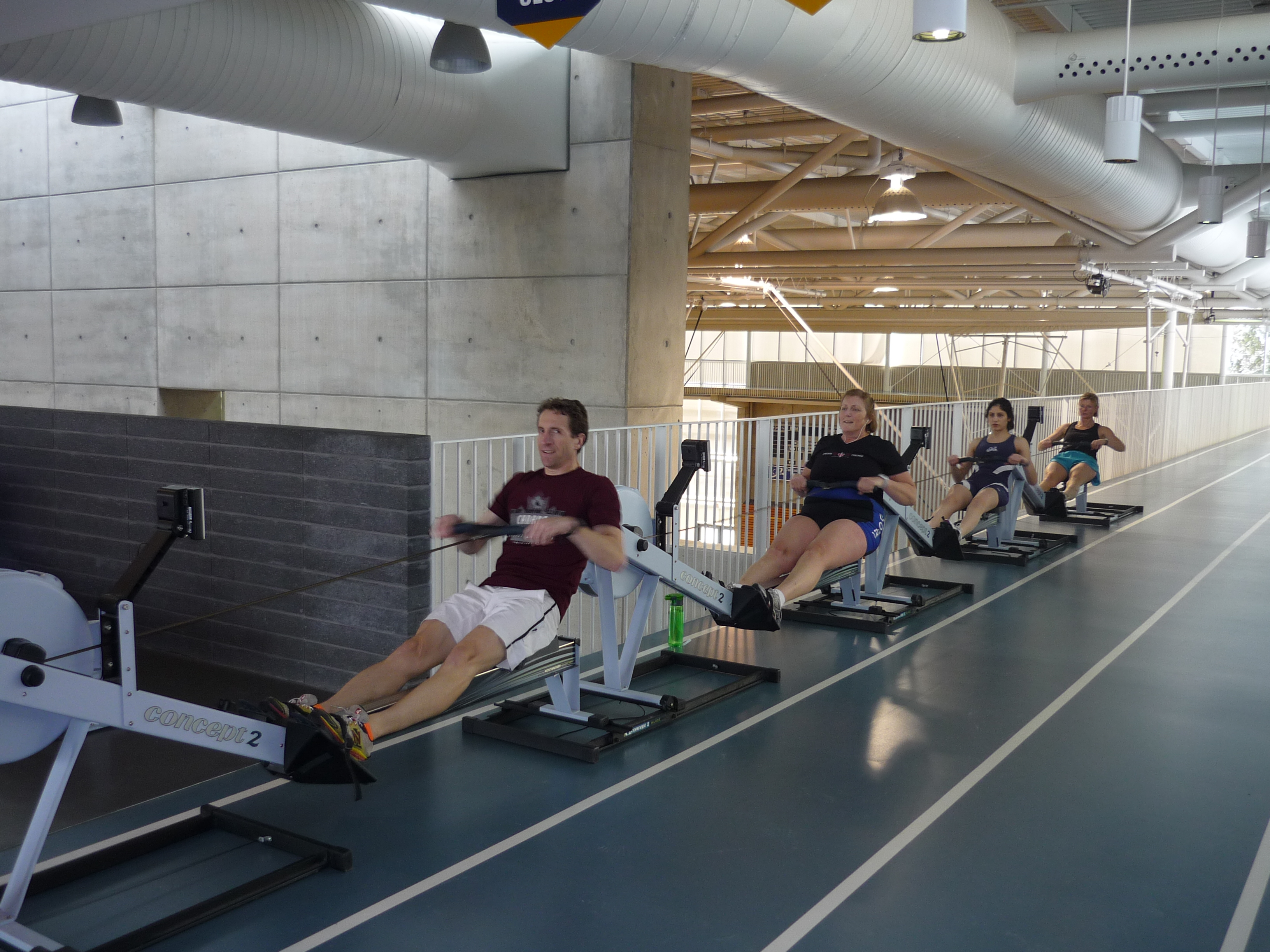
P1020688

Train Together but Mix Things Up: Winter training is an ideal time to team-build. Doing hard work as a group is one way to do that. At the same time, find opportunities to combine athletes who do not normally train or compete together. During the two-hour session, participants each had their individual station itinerary, training with different people at each one.
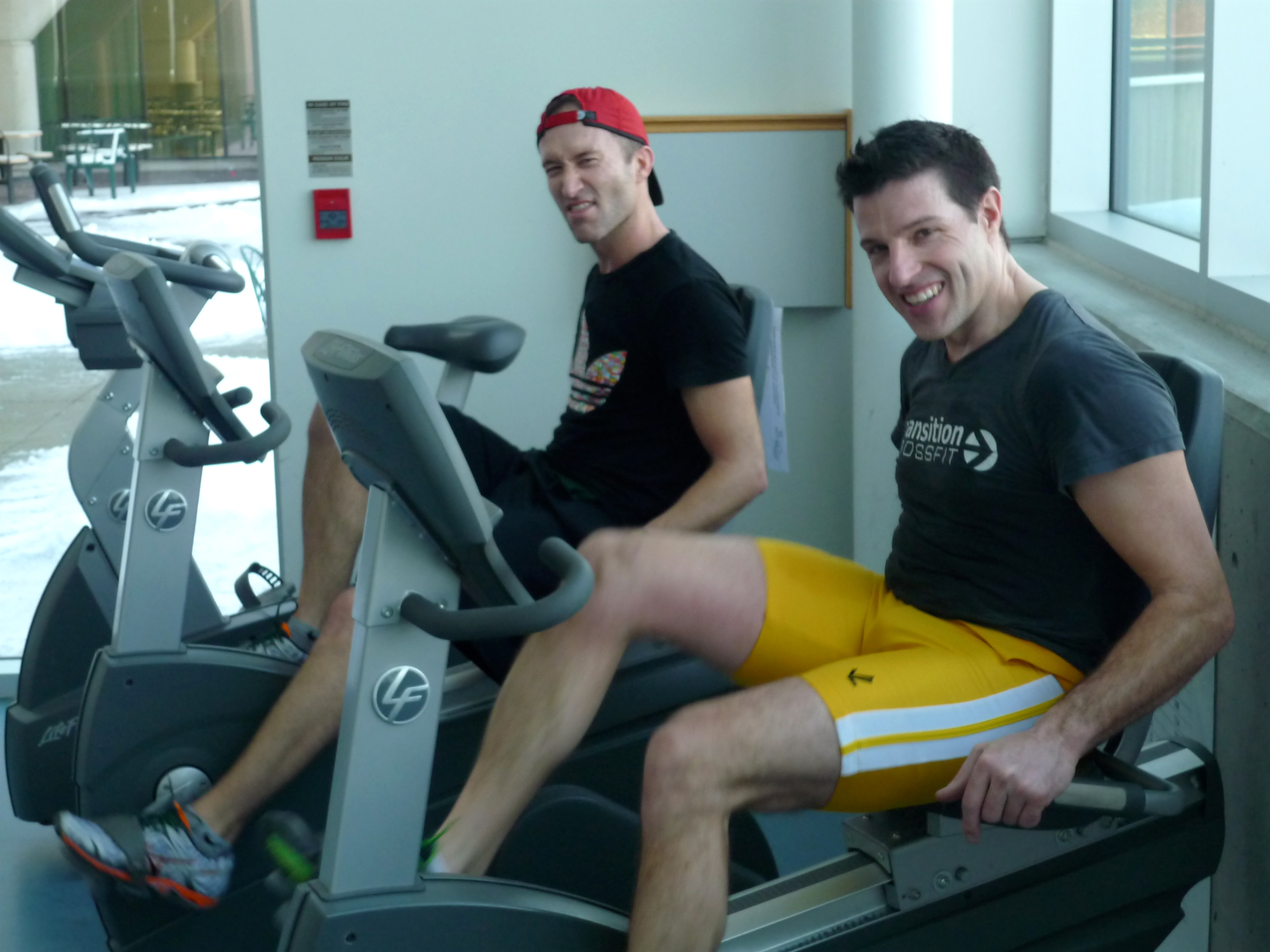
P1020695

Include Activities Your Athletes are Bad At: endurance athletes are good at doing the same thing over and over, but don’t spend much time on agility or coordination skills outside their sport. For a bit of challenge, put in some playtime. This weekend, I had rowers do some “wall climbing” and also try to throw and catch tennis balls in a variety of ways, with humorous results.

P1020691


First Thing Sunday Morning

“Beep-beep.” The gentle alarm on my phone becomes more insistent. “BEEP-beep.” I open one eye. “BEEP-BEEP”. I reach for the Blackberry’s glow and turn off the device, which reads 6:30am. Outside, the wind’s roaring, rattling the window panes a few feet from my head.

January dawn over Lake Ontario.

January dawn over Lake Ontario.

As the old WHAM lyric goes, “It’s cold outside but it’s warm in bed.” Sadly, I don’t have an object of temptation to keep me horizontal, so off come the covers and I sit up. At my feet is the heap of running clothes I dumped beside my bed last night. It’s an effective trick to bypass the “my gear is too far across the room” excuse. Mechanically, I put on the layers of lycra, and apply anti-chafing Bodyglide to my toes.

Across North America this morning, thousands of other runners are rolling out of bed. It’s Sunday, which for most marathoners means long run day. It is the one day of the week where most people can best afford to spend time and energy running far. On my training program, my long run time will top out at 3 hours 20 minutes in March, but today’s assignment is 1 hour 50. Marathoners need to condition themselves to spend that much time on their feet. According to Raymond Britt’s analysis, average finishing times in North American marathons are usually 4 hours or greater.

I go to the kitchen, and let out the dog for his customary morning barking fit. I peer through the window into the dark and see only my bed-headed reflection, and a thermometer that reads the wrong side of freezing. Pre-run food consists of yogurt with chia seeds, some peanut butter (yes, scooped out of the jar) and tea. Note the soft/liquid consistency theme. I know my digestive system well enough to avoid solid food before running(which usually takes me at least 1.5 hours lead time to process).

The dog is let back in, and I step out into the unfriendly roaring darkness – twigs and small branches strewn across the roads and sidewalks. My route is a long out-and-back along Lake Ontario. Strong gusts buffet me front and back, but mainly from the side, causing me to lurch sideways. The kilometres pass. The sky lightens, crisp and clear. My cheeks sting from the cold wind. Other runners, muffled against the elements, nod acknowledgement in cold morning camaraderie. It’s no paradise. But it’s no hell either.